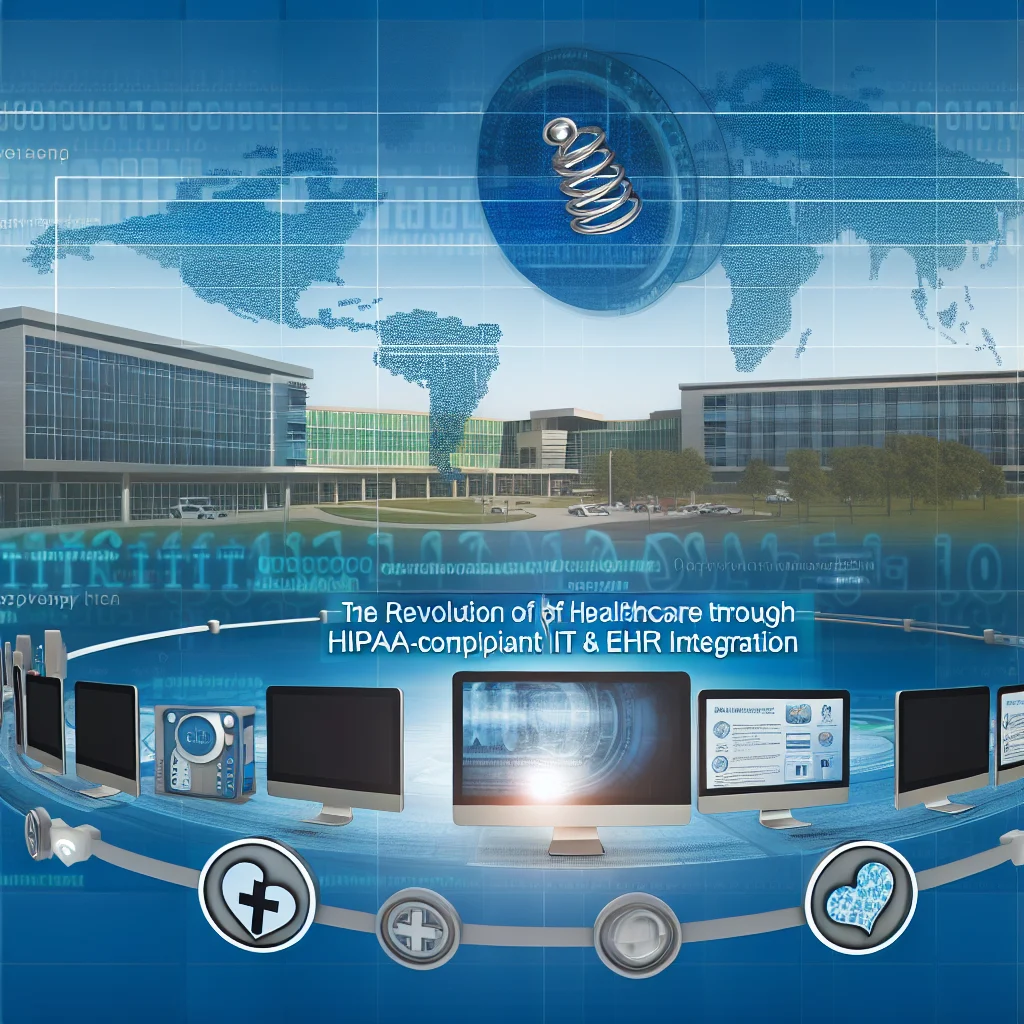
Tech Integration: Revolutionizing Healthcare Systems with Modern IT Strategies
In recent years, the integration of modern information technology strategies into healthcare systems has revolutionized the way medical services are delivered, managed, and experienced. This transformation is not merely a trend but a necessary evolution driven by the increasing demand for efficient, patient-centered care. As healthcare systems worldwide grapple with challenges such as rising costs, aging populations, and the need for improved patient outcomes, the role of IT in healthcare has become more critical than ever.
One of the most significant impacts of IT integration in healthcare is the enhancement of data management and accessibility. Electronic Health Records (EHRs) have replaced traditional paper records, enabling healthcare providers to access patient information swiftly and accurately. This transition not only reduces the risk of errors but also facilitates better coordination among healthcare professionals. With EHRs, patient data can be shared seamlessly across different departments and even between different healthcare facilities, ensuring that every healthcare provider involved in a patient’s care has access to the most up-to-date information.
Moreover, the advent of telemedicine has been a game-changer in expanding access to healthcare services. By leveraging video conferencing, remote monitoring, and mobile health applications, telemedicine allows patients to receive medical consultations and follow-ups without the need for physical visits. This is particularly beneficial for individuals living in remote areas or those with mobility challenges. Telemedicine also plays a crucial role in managing chronic diseases, as it enables continuous monitoring and timely interventions, thereby improving patient outcomes and reducing hospital readmissions.
In addition to improving access and data management, modern IT strategies have also paved the way for advanced analytics and artificial intelligence (AI) in healthcare. By harnessing the power of big data, healthcare providers can gain valuable insights into patient populations, disease trends, and treatment outcomes. Predictive analytics, for instance, can identify patients at high risk of developing certain conditions, allowing for early interventions and personalized treatment plans. AI algorithms are also being used to assist in diagnostic processes, enhancing the accuracy and speed of diagnoses, which is crucial in time-sensitive situations.
Furthermore, the integration of IT in healthcare has led to the development of innovative tools and devices that empower patients to take an active role in their health management. Wearable technology, such as fitness trackers and smartwatches, enables individuals to monitor their vital signs and physical activity levels in real-time. This data can be shared with healthcare providers, facilitating a more collaborative approach to health management. Patient portals and mobile health apps also provide individuals with easy access to their health information, appointment scheduling, and medication reminders, fostering greater engagement and adherence to treatment plans.
Despite the numerous benefits, the integration of IT in healthcare is not without challenges. Concerns about data privacy and security are paramount, as the digitization of health records increases the risk of cyberattacks and data breaches. Healthcare organizations must implement robust cybersecurity measures to protect sensitive patient information. Additionally, there is a need for ongoing training and support for healthcare professionals to effectively utilize new technologies and adapt to changing workflows.
In conclusion, the integration of modern IT strategies into healthcare systems is revolutionizing the industry by enhancing data management, expanding access to care, and enabling advanced analytics. While challenges remain, the potential benefits for both patients and providers are immense, making it imperative for healthcare organizations to continue embracing and investing in innovative IT solutions. As technology continues to evolve, its role in shaping the future of healthcare will undoubtedly become even more profound.
Health IT Trends: Navigating the Future of Clinical Support and Patient Care
In the rapidly evolving landscape of healthcare, the integration of modern IT strategies into healthcare systems is becoming increasingly crucial. As the demand for efficient, patient-centered care grows, healthcare providers are turning to innovative IT solutions to enhance clinical support and improve patient outcomes. This shift is driven by the need to streamline operations, reduce costs, and provide high-quality care in an environment that is both technologically advanced and patient-focused.
One of the most significant trends in healthcare IT is the adoption of electronic health records (EHRs). EHRs have revolutionized the way patient information is stored, accessed, and shared among healthcare professionals. By digitizing patient records, healthcare providers can ensure that critical information is available at the point of care, thereby reducing errors and improving the quality of care. Moreover, EHRs facilitate better coordination among different healthcare providers, enabling a more integrated approach to patient care.
In addition to EHRs, telemedicine has emerged as a vital component of modern healthcare systems. Telemedicine allows patients to consult with healthcare providers remotely, using digital communication tools. This approach not only increases access to care, especially for those in remote or underserved areas, but also reduces the burden on healthcare facilities. By leveraging telemedicine, healthcare providers can offer timely consultations, follow-ups, and even some diagnostic services, all while maintaining the quality of care.
Furthermore, the use of artificial intelligence (AI) in healthcare is gaining momentum. AI technologies are being employed to analyze vast amounts of data, providing insights that can lead to more accurate diagnoses and personalized treatment plans. Machine learning algorithms, for instance, can identify patterns in patient data that may not be immediately apparent to human clinicians. This capability enhances decision-making processes and supports healthcare providers in delivering more precise and effective care.
Another critical aspect of modern IT strategies in healthcare is the emphasis on cybersecurity. As healthcare systems become more digitized, the risk of cyber threats increases. Protecting patient data from breaches and ensuring the integrity of healthcare IT systems is paramount. Healthcare organizations are investing in robust cybersecurity measures, including encryption, multi-factor authentication, and regular security audits, to safeguard sensitive information and maintain patient trust.
Moreover, the integration of wearable technology into healthcare systems is transforming patient care. Wearable devices, such as fitness trackers and smartwatches, enable continuous monitoring of patients’ vital signs and health metrics. This real-time data can be used to detect potential health issues early, allowing for prompt intervention and management. By incorporating wearable technology into their IT strategies, healthcare providers can offer more proactive and personalized care.
In conclusion, the future of clinical support and patient care is being shaped by the strategic implementation of modern IT solutions. From EHRs and telemedicine to AI and wearable technology, these innovations are driving significant improvements in healthcare delivery. As healthcare systems continue to evolve, the integration of advanced IT strategies will be essential in navigating the challenges and opportunities that lie ahead. By embracing these technologies, healthcare providers can enhance patient care, improve operational efficiency, and ultimately, contribute to better health outcomes for all.
Ensuring HIPAA Compliance: Protecting Medical Data in the Digital Age

In the rapidly evolving landscape of healthcare, the integration of information technology has become indispensable. As healthcare systems increasingly rely on digital solutions to enhance patient care and streamline operations, ensuring the security and privacy of medical data has emerged as a paramount concern. The Health Insurance Portability and Accountability Act (HIPAA) serves as a critical framework in this context, mandating stringent standards for the protection of sensitive patient information. As healthcare providers and IT professionals navigate the complexities of the digital age, understanding and implementing HIPAA compliance is essential to safeguarding medical data.
HIPAA, enacted in 1996, was designed to address the growing need for privacy and security in healthcare. It establishes national standards for the protection of health information, ensuring that patient data is handled with the utmost care and confidentiality. In the digital era, where electronic health records (EHRs) and other digital tools are prevalent, HIPAA compliance has become more challenging yet more crucial than ever. The act encompasses several key components, including the Privacy Rule, which sets standards for the protection of individually identifiable health information, and the Security Rule, which outlines requirements for safeguarding electronic protected health information (ePHI).
To ensure HIPAA compliance, healthcare organizations must implement a comprehensive strategy that addresses both technical and administrative safeguards. Technical safeguards involve the use of technology to protect ePHI, such as encryption, access controls, and audit controls. Encryption, for instance, is a critical measure that ensures data is unreadable to unauthorized users, thereby preventing breaches. Access controls, on the other hand, limit who can view or modify patient information, ensuring that only authorized personnel have access to sensitive data. Audit controls provide a mechanism for tracking access and modifications to ePHI, enabling organizations to detect and respond to potential security incidents.
In addition to technical measures, administrative safeguards play a vital role in HIPAA compliance. These include policies and procedures that govern the conduct of the workforce and the management of ePHI. Training programs are essential to ensure that all employees understand their responsibilities under HIPAA and are equipped to handle patient information appropriately. Regular risk assessments are also crucial, as they help identify potential vulnerabilities and guide the implementation of necessary security measures.
Moreover, as healthcare systems increasingly adopt cloud-based solutions and other third-party services, ensuring HIPAA compliance extends beyond the organization itself. Business associate agreements (BAAs) are vital in this regard, as they establish the responsibilities of third-party vendors in protecting ePHI. These agreements ensure that all parties involved in handling patient data adhere to HIPAA standards, thereby mitigating the risk of data breaches.
In conclusion, as healthcare systems continue to embrace digital transformation, ensuring HIPAA compliance remains a critical priority. By implementing robust technical and administrative safeguards, conducting regular risk assessments, and establishing clear agreements with third-party vendors, healthcare organizations can protect patient data in the digital age. As the landscape of healthcare IT continues to evolve, maintaining a strong commitment to HIPAA compliance will be essential in safeguarding the privacy and security of medical information, ultimately fostering trust and confidence among patients and providers alike.
EHR Innovations: Transforming Patient Records and Healthcare Delivery
The integration of Electronic Health Records (EHR) into healthcare systems has revolutionized the way patient information is managed, offering a transformative approach to healthcare delivery. As healthcare systems increasingly adopt modern IT strategies, the innovations in EHR technology have become pivotal in enhancing the efficiency, accuracy, and accessibility of patient records. This transformation is not only reshaping the administrative aspects of healthcare but also significantly impacting patient care and outcomes.
One of the most significant innovations in EHR technology is the shift towards interoperability. Interoperability refers to the ability of different EHR systems to communicate and exchange information seamlessly. This capability is crucial in ensuring that healthcare providers have access to comprehensive patient data, regardless of where the patient has received care. By facilitating the exchange of information across different healthcare settings, interoperability enhances continuity of care, reduces the likelihood of medical errors, and improves overall patient safety. Moreover, it empowers healthcare providers to make more informed decisions, leading to better patient outcomes.
In addition to interoperability, the integration of artificial intelligence (AI) and machine learning into EHR systems is another groundbreaking development. These technologies enable the analysis of vast amounts of patient data to identify patterns and predict outcomes. For instance, AI algorithms can assist in diagnosing diseases at an early stage by analyzing historical data and recognizing subtle indicators that may be overlooked by human clinicians. Furthermore, machine learning models can personalize treatment plans by considering individual patient characteristics and predicting their responses to various interventions. This level of personalization not only enhances the effectiveness of treatments but also optimizes resource allocation within healthcare systems.
Another critical aspect of EHR innovation is the emphasis on patient engagement. Modern EHR systems are increasingly designed to be patient-centric, providing individuals with access to their health records and enabling them to participate actively in their healthcare journey. Patient portals, for example, allow individuals to view their medical history, schedule appointments, and communicate with healthcare providers. This transparency fosters a collaborative relationship between patients and providers, encouraging patients to take a more proactive role in managing their health. As a result, patient engagement is linked to improved adherence to treatment plans and better health outcomes.
Furthermore, the adoption of cloud-based EHR systems is transforming the way healthcare organizations manage data. Cloud technology offers scalable storage solutions, ensuring that healthcare providers can efficiently handle the growing volume of patient data. Additionally, cloud-based systems enhance data security by implementing robust encryption and access controls, addressing concerns about the privacy and confidentiality of patient information. The flexibility of cloud solutions also facilitates remote access to patient records, enabling healthcare providers to deliver care beyond traditional clinical settings and supporting the growing trend of telemedicine.
Despite these advancements, the implementation of EHR systems is not without challenges. Healthcare organizations must navigate issues related to data privacy, system integration, and user training. Ensuring compliance with regulations such as the Health Insurance Portability and Accountability Act (HIPAA) is paramount to safeguarding patient information. Moreover, the successful adoption of EHR technology requires comprehensive training programs to equip healthcare professionals with the necessary skills to utilize these systems effectively.
In conclusion, the innovations in EHR technology are playing a crucial role in transforming patient records and healthcare delivery. Through interoperability, AI integration, patient engagement, and cloud-based solutions, EHR systems are enhancing the quality and efficiency of healthcare services. As healthcare organizations continue to embrace modern IT strategies, the potential for EHR innovations to improve patient care and outcomes remains vast, promising a future where technology and healthcare are seamlessly intertwined.
Optimizing Healthcare Systems: Leveraging IT for Enhanced Clinical Support
In the rapidly evolving landscape of healthcare, the integration of information technology has become a pivotal factor in optimizing healthcare systems. As healthcare providers strive to enhance clinical support, leveraging modern IT strategies is essential for improving patient outcomes, streamlining operations, and reducing costs. The convergence of healthcare and technology is not merely a trend but a necessity, driven by the increasing demand for efficient, high-quality care.
One of the primary ways IT is transforming healthcare systems is through the implementation of electronic health records (EHRs). EHRs have revolutionized the way patient information is stored, accessed, and shared. By digitizing patient records, healthcare providers can ensure that critical information is available at the point of care, thereby reducing errors and improving decision-making. Moreover, EHRs facilitate seamless communication among healthcare professionals, enabling a more coordinated approach to patient care. This integration of data not only enhances clinical support but also empowers patients by providing them with access to their health information, fostering a more collaborative relationship between patients and providers.
In addition to EHRs, telemedicine has emerged as a vital component of modern healthcare IT strategies. Telemedicine leverages technology to deliver healthcare services remotely, breaking down geographical barriers and increasing access to care. This is particularly beneficial for patients in rural or underserved areas who may otherwise face challenges in accessing specialized medical services. By utilizing video conferencing, remote monitoring, and mobile health applications, telemedicine provides a platform for real-time consultations, follow-ups, and even chronic disease management. Consequently, it enhances clinical support by ensuring that patients receive timely and appropriate care, regardless of their location.
Furthermore, the integration of artificial intelligence (AI) and machine learning into healthcare systems is paving the way for more personalized and efficient care. AI algorithms can analyze vast amounts of data to identify patterns and predict outcomes, assisting healthcare providers in making informed decisions. For instance, AI can aid in diagnosing diseases at an early stage, recommending treatment plans, and even predicting patient readmissions. By harnessing the power of AI, healthcare systems can optimize clinical support, reduce the burden on healthcare professionals, and ultimately improve patient outcomes.
Another critical aspect of leveraging IT in healthcare is the implementation of robust cybersecurity measures. As healthcare systems become increasingly digitized, the risk of cyber threats and data breaches escalates. Protecting patient data is paramount, not only to comply with regulations but also to maintain trust between patients and providers. Implementing advanced security protocols, such as encryption and multi-factor authentication, is essential to safeguard sensitive information and ensure the integrity of healthcare systems.
Moreover, the use of data analytics in healthcare is transforming the way providers approach clinical support. By analyzing data from various sources, healthcare organizations can gain insights into patient populations, identify trends, and allocate resources more effectively. This data-driven approach enables providers to implement preventive measures, tailor interventions, and improve overall healthcare delivery.
In conclusion, optimizing healthcare systems through the strategic use of information technology is crucial for enhancing clinical support. From electronic health records and telemedicine to artificial intelligence and data analytics, modern IT strategies are reshaping the healthcare landscape. By embracing these technologies, healthcare providers can improve patient outcomes, increase access to care, and ensure the sustainability of healthcare systems in an ever-changing world. As the healthcare industry continues to evolve, the integration of IT will remain a cornerstone of effective and efficient clinical support.
Unlock the future of healthcare with cutting-edge IT strategies! Discover essential insights in “Healthcare IT Insights: Healthcare systems and Modern IT Strategies (9)” and transform your healthcare system today. Learn more.