Revolutionizing Patient Care: The Role of AI in Healthcare
The integration of artificial intelligence (AI) into healthcare is revolutionizing patient care, offering unprecedented opportunities to enhance medical outcomes and streamline operations. As AI technologies continue to evolve, they are increasingly being utilized to analyze complex medical data, predict patient outcomes, and personalize treatment plans. This transformation is not only improving the efficiency of healthcare delivery but also significantly enhancing the quality of care provided to patients.
One of the most promising applications of AI in healthcare is in the realm of diagnostics. AI algorithms, particularly those based on machine learning, have demonstrated remarkable accuracy in interpreting medical images such as X-rays, MRIs, and CT scans. These algorithms can identify patterns and anomalies that may be imperceptible to the human eye, thereby facilitating early detection of diseases such as cancer. By providing clinicians with precise diagnostic insights, AI is enabling more timely and effective interventions, ultimately improving patient prognoses.
In addition to diagnostics, AI is playing a crucial role in the development of personalized medicine. By analyzing vast amounts of patient data, including genetic information, AI systems can identify unique biomarkers and predict individual responses to various treatments. This capability allows healthcare providers to tailor therapies to the specific needs of each patient, thereby maximizing efficacy and minimizing adverse effects. As a result, personalized medicine is becoming a cornerstone of modern healthcare, offering patients more targeted and effective treatment options.
Moreover, AI is transforming the way healthcare providers manage patient care. Through the use of predictive analytics, AI can forecast patient admissions, readmissions, and potential complications, enabling hospitals to optimize resource allocation and improve patient flow. This proactive approach not only enhances operational efficiency but also ensures that patients receive timely and appropriate care. Furthermore, AI-powered virtual assistants and chatbots are increasingly being used to support patient engagement and education, providing individuals with instant access to medical information and guidance.
The integration of AI into healthcare is also fostering advancements in drug discovery and development. Traditional drug development processes are often time-consuming and costly, but AI has the potential to expedite these processes by identifying promising drug candidates and predicting their efficacy and safety profiles. By leveraging AI, pharmaceutical companies can streamline clinical trials and bring new therapies to market more quickly, ultimately benefiting patients who are in need of innovative treatments.
Despite the numerous advantages of AI in healthcare, it is important to acknowledge the challenges and ethical considerations associated with its implementation. Ensuring data privacy and security is paramount, as is addressing potential biases in AI algorithms that could lead to disparities in care. Additionally, the integration of AI into clinical practice requires careful consideration of regulatory frameworks and the need for ongoing collaboration between technologists and healthcare professionals.
In conclusion, the role of AI in healthcare is rapidly expanding, offering transformative potential to revolutionize patient care. By enhancing diagnostic accuracy, personalizing treatment plans, optimizing healthcare operations, and accelerating drug development, AI is poised to become an integral component of modern medicine. As the healthcare industry continues to embrace these technological innovations, it is essential to navigate the associated challenges thoughtfully, ensuring that the benefits of AI are realized equitably and ethically for all patients.
Enhancing Health Information Systems: IT Innovations for Better Data Management
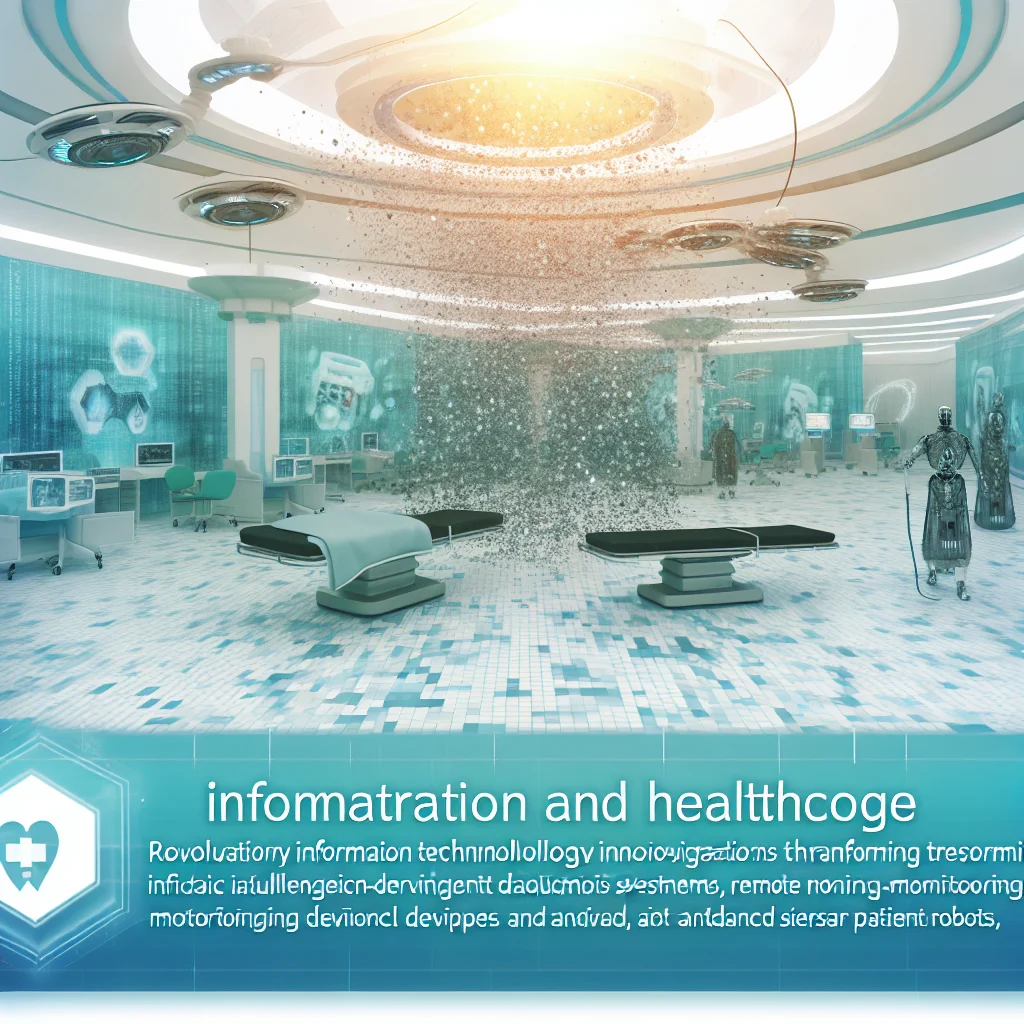
In recent years, the healthcare industry has witnessed a transformative shift driven by the integration of information technology, particularly in the realm of health information systems. These innovations are not only enhancing the efficiency of data management but are also paving the way for improved patient care and streamlined operations. As healthcare providers increasingly rely on digital solutions, the importance of robust health information systems cannot be overstated. These systems serve as the backbone of modern healthcare, facilitating the seamless exchange of information across various platforms and stakeholders.
One of the most significant advancements in this area is the development of electronic health records (EHRs). EHRs have revolutionized the way patient information is stored, accessed, and shared. By digitizing patient records, healthcare providers can ensure that critical information is readily available to authorized personnel, thereby reducing the risk of errors and improving the quality of care. Moreover, EHRs enable healthcare professionals to track patient histories more efficiently, leading to more informed decision-making and personalized treatment plans. As a result, the adoption of EHRs has become a cornerstone of modern healthcare systems.
In addition to EHRs, the integration of cloud computing has further enhanced data management capabilities. Cloud-based solutions offer scalable storage options and facilitate real-time data access, which is particularly beneficial for large healthcare organizations with multiple locations. By leveraging cloud technology, healthcare providers can ensure that data is not only secure but also accessible from anywhere, at any time. This level of accessibility is crucial for coordinating care among different providers and ensuring continuity of care for patients.
Furthermore, the advent of big data analytics has opened new avenues for improving healthcare outcomes. By analyzing vast amounts of data, healthcare organizations can identify patterns and trends that were previously undetectable. This capability allows for more accurate predictions of disease outbreaks, better understanding of patient populations, and the development of targeted interventions. Big data analytics also supports the shift towards value-based care, where providers are incentivized to deliver high-quality care rather than a high volume of services. By utilizing data-driven insights, healthcare organizations can optimize their operations and improve patient satisfaction.
Another noteworthy innovation is the use of artificial intelligence (AI) in health information systems. AI technologies, such as machine learning algorithms, are being employed to automate routine tasks, such as data entry and billing, thereby freeing up valuable time for healthcare professionals to focus on patient care. Additionally, AI can assist in diagnosing diseases by analyzing medical images and identifying anomalies with greater accuracy than traditional methods. This not only enhances diagnostic precision but also accelerates the treatment process, ultimately leading to better patient outcomes.
As these technological advancements continue to evolve, the importance of interoperability cannot be overlooked. Ensuring that different health information systems can communicate effectively is essential for maximizing the benefits of IT innovations. Interoperability allows for the seamless exchange of data across various platforms, reducing redundancies and minimizing the risk of errors. By fostering collaboration among different systems, healthcare providers can deliver more coordinated and efficient care.
In conclusion, the integration of IT innovations in health information systems is reshaping the landscape of healthcare. From electronic health records and cloud computing to big data analytics and artificial intelligence, these advancements are enhancing data management and improving patient care. As the industry continues to embrace these technologies, the future of medical technology promises to be one of increased efficiency, accuracy, and collaboration, ultimately leading to better health outcomes for all.
Securing Patient Data: Advances in Healthcare Data Security

In the rapidly evolving landscape of healthcare, the integration of information technology has brought about transformative changes, particularly in the realm of data security. As medical technology advances, the need to secure patient data has become paramount, given the sensitive nature of health information and the increasing threats posed by cyberattacks. The protection of patient data is not only a legal obligation but also a critical component in maintaining trust between healthcare providers and patients. Consequently, the healthcare industry is witnessing significant innovations aimed at enhancing data security.
One of the most promising advancements in healthcare data security is the implementation of blockchain technology. Originally developed for cryptocurrency transactions, blockchain offers a decentralized and immutable ledger system that can significantly enhance the security of patient records. By ensuring that data is encrypted and distributed across a network of computers, blockchain minimizes the risk of unauthorized access and data breaches. This technology also provides a transparent and traceable record of all transactions, which can be invaluable in maintaining the integrity of patient data.
In addition to blockchain, artificial intelligence (AI) is playing a crucial role in fortifying healthcare data security. AI-driven systems can analyze vast amounts of data to identify patterns and detect anomalies that may indicate a security threat. Machine learning algorithms can continuously learn from new data, improving their ability to predict and prevent potential breaches. By automating threat detection and response, AI not only enhances security but also reduces the burden on IT professionals, allowing them to focus on more complex tasks.
Moreover, the adoption of advanced encryption techniques is another critical development in securing patient data. Encryption transforms data into a coded format that can only be accessed by individuals with the correct decryption key. This ensures that even if data is intercepted, it remains unreadable and secure. Innovations in encryption, such as homomorphic encryption, allow for data to be processed without being decrypted, thereby maintaining security while enabling data analysis and sharing.
Furthermore, the rise of cloud computing in healthcare has necessitated robust security measures to protect data stored off-site. Cloud service providers are implementing multi-layered security protocols, including firewalls, intrusion detection systems, and regular security audits, to safeguard patient information. Additionally, the use of virtual private networks (VPNs) and secure access service edge (SASE) frameworks are becoming standard practices to ensure secure data transmission between healthcare facilities and cloud servers.
The integration of biometric authentication methods is also enhancing data security in healthcare. By using unique biological characteristics such as fingerprints, facial recognition, or iris scans, healthcare providers can ensure that only authorized personnel have access to sensitive information. This not only strengthens security but also streamlines the authentication process, making it more efficient and user-friendly.
As healthcare organizations continue to adopt these innovative technologies, it is essential to remain vigilant and proactive in addressing emerging security challenges. Regular training and awareness programs for healthcare staff are crucial in fostering a culture of security and ensuring that all personnel are equipped to recognize and respond to potential threats. Additionally, collaboration between healthcare providers, technology companies, and regulatory bodies is vital in developing comprehensive security standards and protocols.
In conclusion, the future of medical technology is inextricably linked to the advancement of healthcare data security. By embracing innovations such as blockchain, artificial intelligence, advanced encryption, cloud computing, and biometric authentication, the healthcare industry is taking significant strides towards safeguarding patient data. These efforts not only protect sensitive information but also enhance the overall quality of care, ensuring that patients can trust their healthcare providers with their most personal information.
The Future of Medical Technology: Integrating IT Innovations in Healthcare
The integration of information technology in healthcare has ushered in a new era of medical innovation, transforming the way healthcare is delivered and experienced. As we look to the future, the convergence of IT and healthcare promises to enhance patient outcomes, streamline operations, and foster a more personalized approach to medicine. One of the most significant advancements in this domain is the development of electronic health records (EHRs), which have revolutionized the way patient information is stored and accessed. EHRs facilitate seamless communication among healthcare providers, ensuring that patient data is readily available and up-to-date, thus reducing the likelihood of medical errors and improving the overall quality of care.
Moreover, the advent of telemedicine has expanded access to healthcare services, particularly for individuals in remote or underserved areas. By leveraging video conferencing and other digital communication tools, telemedicine enables patients to consult with healthcare professionals without the need for physical travel. This not only enhances convenience but also ensures that patients receive timely medical attention, which is crucial for managing chronic conditions and preventing complications. As telemedicine continues to evolve, it is expected to incorporate more sophisticated technologies, such as virtual reality and augmented reality, to provide immersive and interactive healthcare experiences.
In addition to telemedicine, wearable technology is playing an increasingly important role in the healthcare landscape. Devices such as smartwatches and fitness trackers monitor vital signs and physical activity, providing valuable data that can be used to assess a patient’s health status. This real-time monitoring allows for early detection of potential health issues, enabling proactive intervention and personalized treatment plans. Furthermore, the integration of artificial intelligence (AI) in these devices enhances their predictive capabilities, offering insights that can guide clinical decision-making and improve patient outcomes.
The application of AI extends beyond wearable technology, as it is being utilized to analyze vast amounts of medical data, identify patterns, and predict disease progression. Machine learning algorithms can process complex datasets more efficiently than human analysts, uncovering correlations that may not be immediately apparent. This capability is particularly beneficial in the field of precision medicine, where treatments are tailored to the individual characteristics of each patient. By analyzing genetic information and other biomarkers, AI can help identify the most effective therapies for specific conditions, minimizing trial-and-error approaches and optimizing treatment efficacy.
Furthermore, the integration of blockchain technology in healthcare is poised to enhance data security and privacy. Blockchain’s decentralized nature ensures that patient information is stored in a secure and tamper-proof manner, reducing the risk of data breaches and unauthorized access. This is particularly important as healthcare organizations increasingly rely on digital systems to manage sensitive patient data. By providing a transparent and immutable record of transactions, blockchain can also streamline administrative processes, such as billing and claims management, reducing costs and improving efficiency.
As we move forward, the continued integration of IT innovations in healthcare will undoubtedly reshape the medical landscape. However, it is essential to address the challenges associated with these advancements, such as ensuring data privacy, managing the ethical implications of AI, and bridging the digital divide to ensure equitable access to technology. By addressing these issues, we can harness the full potential of IT innovations to create a more efficient, effective, and patient-centered healthcare system. The future of medical technology is bright, and with careful consideration and strategic implementation, it holds the promise of transforming healthcare for the better.
Transforming Healthcare Delivery: The Impact of IT Innovations on Patient Care
The integration of information technology into healthcare has revolutionized the way medical services are delivered, significantly enhancing patient care. As the digital landscape continues to evolve, healthcare providers are increasingly leveraging IT innovations to improve the quality, efficiency, and accessibility of medical services. One of the most transformative aspects of this evolution is the advent of electronic health records (EHRs), which have replaced traditional paper-based systems. EHRs facilitate seamless access to patient information, enabling healthcare professionals to make informed decisions quickly. This digitalization of records not only reduces the risk of errors but also enhances coordination among different healthcare providers, ensuring that patients receive comprehensive and continuous care.
Moreover, telemedicine has emerged as a pivotal innovation, particularly in the wake of the COVID-19 pandemic. By allowing patients to consult with healthcare providers remotely, telemedicine has expanded access to medical services, especially for those in rural or underserved areas. This technology not only reduces the need for travel but also minimizes the risk of exposure to infectious diseases, making healthcare more convenient and safer for patients. Additionally, telemedicine platforms often incorporate features such as video conferencing, secure messaging, and remote monitoring, which collectively contribute to a more personalized and efficient patient experience.
In parallel, the rise of wearable technology has empowered patients to take a more active role in managing their health. Devices such as smartwatches and fitness trackers monitor vital signs, physical activity, and even sleep patterns, providing users with real-time data about their health. This information can be shared with healthcare providers, allowing for more proactive and preventive care. By enabling continuous monitoring, wearable technology helps in the early detection of potential health issues, thereby facilitating timely interventions and reducing the burden on healthcare systems.
Furthermore, artificial intelligence (AI) is playing an increasingly significant role in transforming healthcare delivery. AI algorithms are being used to analyze vast amounts of medical data, leading to more accurate diagnoses and personalized treatment plans. For instance, AI-powered imaging tools can detect anomalies in medical scans with remarkable precision, often surpassing human capabilities. This not only speeds up the diagnostic process but also enhances the accuracy of medical assessments, ultimately improving patient outcomes.
In addition to these innovations, blockchain technology is gaining traction as a means to enhance data security and privacy in healthcare. By providing a decentralized and tamper-proof ledger, blockchain ensures that patient data is stored securely and can only be accessed by authorized individuals. This is particularly important in an era where data breaches and cyber threats are becoming increasingly common. By safeguarding sensitive information, blockchain technology helps build trust between patients and healthcare providers, encouraging more open and transparent communication.
As these IT innovations continue to advance, they hold the potential to further transform healthcare delivery. However, it is crucial to address the challenges associated with their implementation, such as ensuring interoperability between different systems, maintaining data privacy, and providing adequate training for healthcare professionals. By overcoming these hurdles, the healthcare industry can fully harness the power of information technology to deliver more effective, efficient, and patient-centered care. Ultimately, the integration of IT innovations into healthcare not only enhances the quality of medical services but also paves the way for a more sustainable and equitable healthcare system.
Discover the transformative power of IT innovations in healthcare and explore the future of medical technology. Stay ahead in the rapidly evolving landscape of healthcare by embracing cutting-edge solutions. Learn more today!